
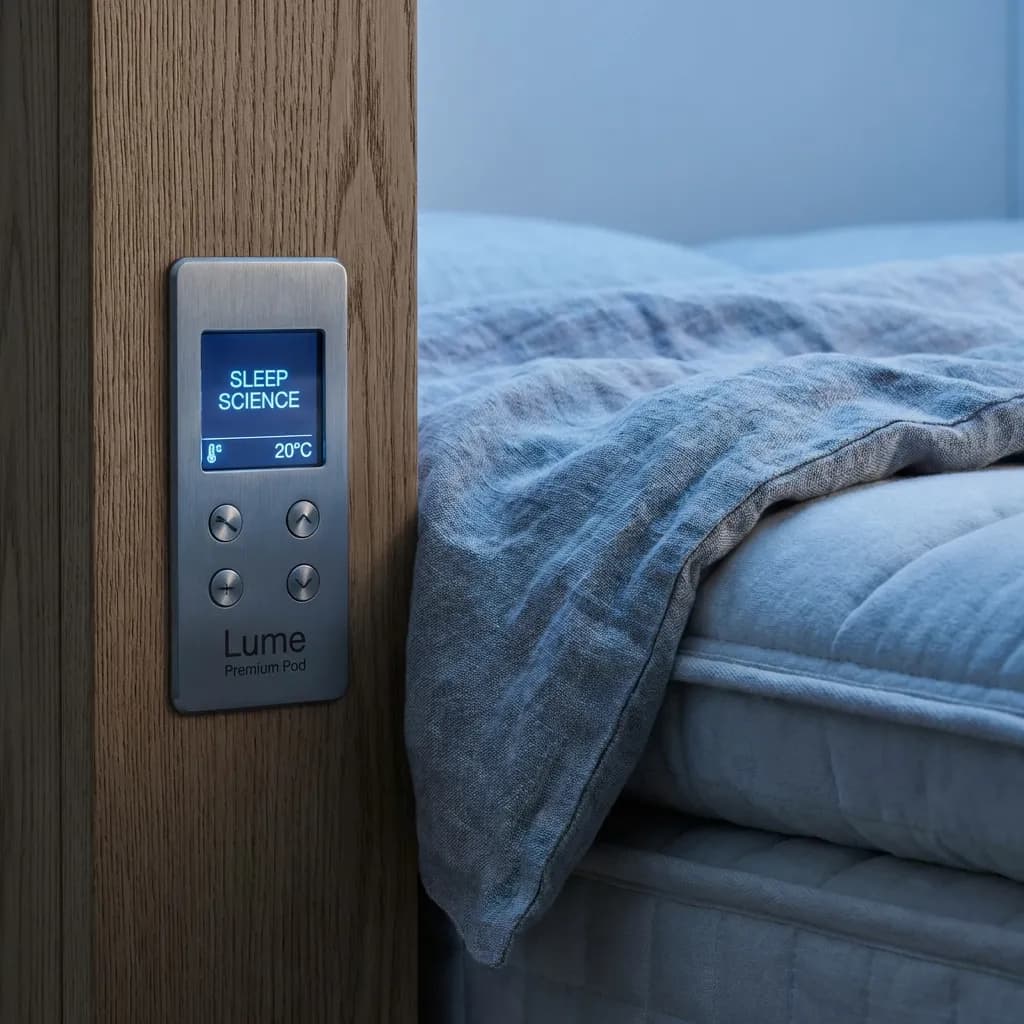
The science behind our sleep-engineered environments. How acoustic isolation, circadian lighting, and CO2 monitoring create the perfect conditions for restorative rest.
The Architecture of Sleep
In a traditional hotel room, your sleep is a gamble. Thin walls, hallway noise, ambient light leakage, and questionable air quality all conspire to fragment your REM cycles. At Lume, we didn't just design a bed; we engineered a sleep system.
1. Acoustic Isolation (<30dB) Silence is the ultimate luxury in a city. Our pods are constructed with multi-layered acoustic damping materials that reduce external noise to below 30 decibels—the level of a quiet whisper. This "acoustic womb" allows your brain to reach deep sleep states faster, without the micro-awakenings caused by urban noise pollution.
2. Circadian Lighting Light signals your body when to be awake and when to rest. Our proprietary lighting system mimics the natural progression of the sun. Upon check-in, the light is warm and dim, signaling melatonin production. In the morning, a gradual "sunrise" sequence gently wakes you up, suppressing melatonin and boosting cortisol for alert energy.
3. Air Quality Optimisation Stale air leads to groggy mornings. Each Lume pod features individual hospital-grade HEPA filtration and active CO2 monitoring. By maintaining optimal oxygen levels and removing particulate matter, we ensure your brain gets the fuel it needs to repair itself overnight.
The Result: Sleep Efficiency Studies show that "Sleep Efficiency"—the ratio of time spent asleep to time spent in bed—is significantly higher in controlled micro-environments. By removing external disruptors, Lume allows you to achieve the same restorative effect in 7 hours that might take 9 hours in a standard, uncontrolled bedroom.
Sleep Smart. Dream Big.
Words by Dr. E. Thorne, Sleep Architect
#Wellness#Technology#Design

